
 by Mr. Gerald Lazar
The other day, I asked a colleague to pass me my school bag. He lifted it and asked, “What are you carrying in this? It feels empty.” I replied, “At this point, really, it’s just a glorified lunch bag.” Perhaps not the most dramatic anecdote, but that light bag is just one of the many benefits I have enjoyed since going paperless.
Three years ago, we began a 1:1 student:laptop program with our grade 9 students. There have been some bumps in the road since then and the decision has been questioned at times. There is still much research being done on laptop usage in the classroom (here’s a recent anti-technology one – and one pro-technology). There are university professors who are banning technology in their classrooms. Even outside of the classroom, there are signs that social media usage is increasing cases of depression. Social media is also being used to bully, and while bullying is not new, bullies can now access their victims outside of school, cowardly targeting others anonymously.

But we need to begin by facing one basic fact: technology is reality. As Religious Zionist Jews, our students are exposed to internet and social media. Over 90% of our students have phones, many of them smartphones. Before we mandated laptops, a majority of students were using them anyway. Technology is a key part of most workplaces. I know I spend most of my non-teaching time composing or responding to e-mails. We must teach our students how to use technology in order to succeed in university and in their future careers. Beyond that, we must teach our students responsible usage of technology.
Do we need to stare at screens every minute of every day? Absolutely not. Many of the school’s teachers clearly delineate between time in class when a laptop can be open, and time it should be closed. Class discussions, presentations, lectures without notes being taken, reading texts – there are many opportunities to engage without a laptop.
There are many times when having a laptop enhances a classroom environment. When most students only had computers at home, I would give an assignment and it was challenging to check in – they didn’t remember to bring their USB key, were going to print but ran out of paper, emailed it to me as a .pages file which I can’t open, etc. When we had a computer lab back in the Stone Age, having them work there also meant they needed access to work they were probably doing exclusively at home.
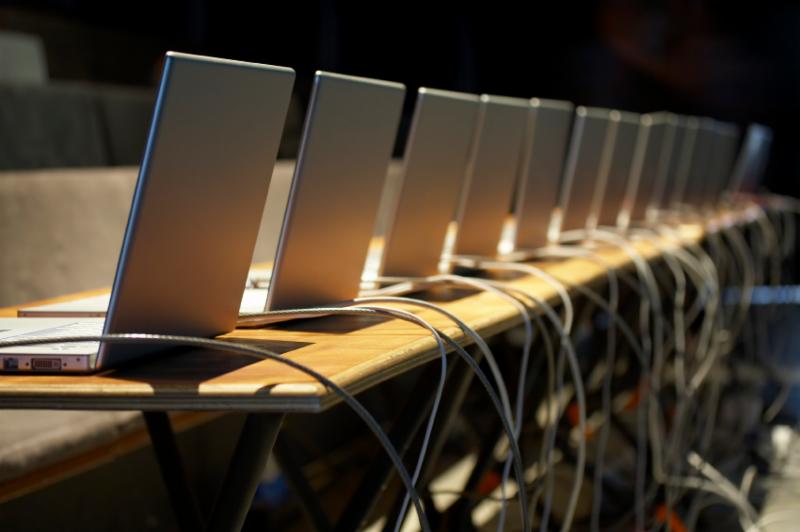
I’m going to do my best not to sound like a Google ad – but since we have been using Classroom and Docs, students always have access to their work, can always retrieve and recover their work, and can do their assignments on any computer. When I give a written assignment, I allow some time in class for students to work so I can circulate and check in. I answer questions, make suggestions, support them with their writing process and ensure students are on task, ultimately improving their written work and their grades.
Accessing everything through Drive also means that nothing goes missing. Not only do I rarely carry papers or books anymore, my students and I do not have to worry about forgetting anything at home. On occasion when I have to use the photocopier, I’m reminded how much paper and time I save by doing all of my classwork online, saving both time and the environment!
Texts are available online – from all of Tanach to all of Shakespeare’s plays. Notes can be neatly taken directly into these texts. Research, group projects, presentations – all easier to prepare when every student has a laptop.
Do we, on occasion, find a student on Whatsapp messenger instead of the task they should be on? Yes. However, did students daydream and get distracted before Snapchat and Facebook? Of course. Educators have to adapt to the times and engage students in the subjects we teach. I use two main strategies when laptops are being used in class: (1) I teach from the back of the room so I can keep an eye on screens (there are many other creative classroom ideas out there); and (2) I encourage students who are bored instead of daydreaming or trying to play a computer game to research what we’re doing further. In a History or Social Sciences class, students can add much to the conversation by doing a little bit of their own research, available at their fingertips.
There is no question that technology has created many problems in today’s world. Cell phone culture has created unhealthy habits – who doesn’t reach for their phone to keep themselves interested when bored for 30 seconds? When you’re waiting in line at the grocery store, waiting for a chuppa to start – the urge to check Instagram is just too strong. As Orthodox Jews, having Shabbat forces us to take a vacation from our emails for 25 hours. I’ve only grown to appreciate Shabbat more thanks to how ingrained technology has become in my day-to-day life. That balance is key to ensuring we embrace technology and learn how to use it responsibly, while still appreciating actual life and real people (click here for more on the importance of real connections!).
Sometimes there are frustrations with going paperless in a classroom. However, I’m confident it was the right direction for me to take. It has enhanced classroom learning, engaged students better and made it easier to stay organized and support students. Now the only thing I may forget at home is my lunch.